How to Spot Common Winter HVAC Problems in Your Home

Last Updated: November 4, 2026
Quick Summary
The most common winter HVAC problems in Kokomo are a dirty filter, weak ignition, a wrong thermostat setting, and a heat pump icing up. Many can be checked first at home, but a cracked heat exchanger or a gas smell requires leaving the house and calling for professional help right away.
Replace a clogged filter first, since it causes weak airflow, short cycling and cold rooms.
Check that the thermostat is set to Heat, the setpoint is above room temperature, and batteries are fresh.
Heat pump defrost produces brief steam and cool air, which is normal; thick ice that keeps building is not.
Hold a filter to a bright light; if you can barely see through it, replace it.
Never open the furnace cabinet or repeatedly restart it if you smell gas; leave and call your gas provider.
Table of Contents
Why Winter Puts Extra Strain on Your HVAC System in Kokomo
Winter is the hardest season on your heating system, and Winter HVAC problems tend to show up with every cold snap.
Most winter failures are not random. They tend to come from a short list of causes: a dirty filter, a weak ignition, a thermostat set wrong, or a heat pump that is icing up.
Here is how the common problems usually show up:
The house never gets warm, even when the furnace runs
Some rooms are cold while others feel fine
Warm air blows weakly or not at all
This guide walks through each problem, what causes it, and what you can safely check yourself before calling a technician.
Furnace Not Heating: Causes and First Checks
When a furnace runs but the house stays cold, start with the basics. Check that the thermostat is set to heat and the set temperature is above the room temperature.
Next, confirm the power is on. Check the furnace switch near the unit and the breaker in your electrical panel. Do not open the furnace cabinet if you smell gas.
Ignition and Pilot Light Problems
Many furnaces will not heat because the burners never light. Older models use a standing pilot light. Newer models use an electronic igniter that glows hot before the gas opens.
Watch out: a furnace that clicks, tries to light, and shuts off several times is protecting itself. Repeated restart attempts can overheat parts and make the problem worse. Turn the thermostat down, and call for service instead of forcing repeated restarts.
Cracked Heat Exchanger Warning Signs
The heat exchanger is the metal part that keeps combustion gases separate from your indoor air. A crack in it can release carbon monoxide into the home, which is why this is one of the most serious furnace problems.
Warning signs include a burning smell or a strange odor when the furnace starts, soot or staining around the unit, yellow or flickering burner flames, and symptoms like headaches, dizziness, or nausea in people in the home.
Furnace Blowing Cold Air: Airflow, Thermostat, and Filter Causes
A furnace that blows cold air is usually a furnace that is running, but not moving enough warm air across the heat exchanger.

Start with the filter. Hold it up to a light. If you can barely see through it, replace it.
Replace a dirty filter and recheck the airflow
Open closed or blocked supply vents
Clear any clutter from return air grilles
If the furnace still blows cold after these checks, the problem may be the thermostat, the blower motor, or the ignition.
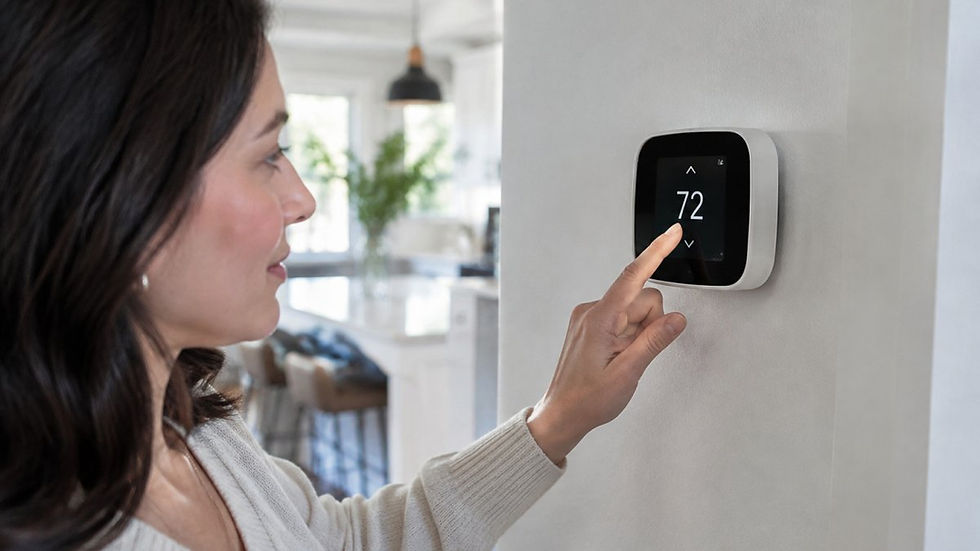
Thermostat Settings in Winter and Why They Affect Comfort
Many winter comfort complaints trace back to the thermostat, not the equipment. A setting that is too low, a schedule that dropped the temperature overnight, or a thermostat placed near a drafty window can all make a home feel cold even when the furnace or heat pump is working correctly.
A Safe, Ordered Thermostat Check
Work through these steps in order before assuming the system has failed:
Confirm the mode is set to Heat, not Cool, Auto, or Off. On some models, Auto can switch to cooling if the room warms past the setpoint.
Raise the setpoint 3-5°F above the current room temperature and wait 5-10 minutes. A furnace should begin its ignition sequence; a heat pump may take longer to deliver warm air at the vents.
Check the fan setting. Auto runs the blower only during a heat call; On runs it continuously. If the fan is On and the system is not heating, you will feel cool air moving, that is a symptom, not a fix.
Replace the batteries if the display is dim, blank, or flickering. Low batteries can cause wrong temperature readings or a failure to call for heat.
Look for a schedule or hold override. A program that sets back to 62°F overnight will feel cold by morning, and a hold that never expires can keep the house cool indefinitely.
Watch out: do not repeatedly raise the setpoint in large jumps to force faster heat. Most furnaces and heat pumps run at a fixed capacity, and large setbacks force a long recovery run that can trip high-limit switches on older furnaces.
Why Thermostat Location Matters
A thermostat on an exterior wall, near a drafty door, or in direct sun reads a temperature that does not match the rest of the house. A unit near a sunny window may think the home is warm and stop calling for heat while interior rooms stay cold. A unit near a drafty entry may run the system continuously. If your thermostat is in either spot, a remote sensor or a relocation is often the real fix.
Furnace vs. Heat Pump: Different Thermostat Behavior
A furnace delivers warmer air at the supply register than a heat pump does, so the house often warms more quickly. A heat pump delivers cooler-feeling air, which can feel unfamiliar to a homeowner used to a furnace. That is normal, not a fault. Heat pumps also rely on auxiliary or emergency heat during defrost and cold snaps; if the thermostat is stuck on Emergency Heat, the system will run expensive resistance heat only and may not keep up.
When the Thermostat Is Not the Problem
If the thermostat is set correctly, the batteries are fresh, and the system still will not heat, the issue is likely at the equipment: ignition, blower, refrigerant charge, or a safety switch. Those checks are best handled by a qualified technician. Do not open the furnace cabinet or bypass a safety switch to test the thermostat.
Heat Pump Defrost Cycles Versus a Real Fault
Heat pumps need to defrost in cold weather. The outdoor coil can collect frost, and the system periodically reverses to melt it.
A real fault looks different.
To tell the difference, look at the outdoor unit for a few minutes during a cycle. Brief frost that melts is normal. Thick ice that keeps building is not. Clear snow and debris away from the outdoor unit, but never chip ice off with a tool.
Furnace Filter Replacement Frequency and Winter Airflow
Winter is when the filter works hardest. A seasonal tune-up covers filter checks along with the rest of the system before the cold sets in. The system runs more hours, and dust, pet hair, and debris build up faster. A clogged filter is one of the easiest winter problems to prevent, and it is also one of the most common causes of the symptoms homeowners mistake for a broken furnace: weak airflow, cold rooms, short cycling, and a system that runs but never satisfies the thermostat.
How to Inspect a Filter
Hold the filter up to a bright light. If you can see clearly through it, it still has life. If light barely passes through, replace it. Also check for a visible gray mat of dust, pet hair, or lint on the intake side. A filter that looks clean but is more than 90 days old may still be loaded with fine dust that you cannot see.
Replacement Frequency by Home and System
Standard 1-inch filters: check monthly during heating season; replace every 30-90 days depending on pets, occupants, and outdoor dust.
Homes with pets or allergy sufferers: replace every 30-45 days in winter.
High-MERV or media filters: follow the manufacturer's interval, often 6-12 months, but check monthly because a loaded high-MERV filter restricts airflow more than a loaded low-MERV filter.
MERV Ratings and the Airflow Trade-Off
MERV is the rating scale for how well a filter captures particles. A higher MERV captures more, but it also creates more resistance. Many residential furnaces and heat pumps are designed for a moderate range of filter ratings; check your equipment's manufacturer specifications.
Watch out: do not run the system without a filter to "improve airflow." That lets dust coat the blower wheel and evaporator coil, which is a far more expensive problem than a filter change.
Filter Size and Fit
Use the exact size printed on the old filter's frame. A filter that is too small lets air bypass around the edges, so the system pulls dust straight into the blower. A filter that is too thick may not seat, and a filter installed backward (arrow pointing toward the blower, not away) can reduce efficiency and, on some pleated designs, collapse under load.
How a Dirty Filter Causes Winter Symptoms
A restricted filter lowers airflow across the heat exchanger. The furnace limits how hot the metal gets by cycling the burners on a high-limit switch, which shows up as short cycling. The blower also runs longer to move the same air, which raises energy use. In heat pumps, low airflow drops the indoor coil temperature and can cause the system to ice up or go into repeated defrost.
When a Filter Change Is Not Enough
If airflow is still weak after a new filter, check that supply vents and return grilles are open and not blocked by furniture, rugs, or curtains. If the blower runs but airflow stays low, the blower wheel may be dirty or the ductwork may be undersized or leaking.
The table below summarises how often to check or replace a furnace filter, based on the home and filter type.
Filter or home type | Check or replace | Note |
Standard 1-inch filter | Every 30-90 days | Check monthly during heating season |
Homes with pets or allergy sufferers | Every 30-45 days | Replace more often in winter |
High-MERV or media filter | Often 6-12 months | Check monthly; loaded filters restrict airflow |
Washable filter | Typically monthly | Let dry fully before reinstalling |
When to Call Grace Mechanical Services for Winter HVAC Repair
Some winter problems are safe to check yourself, but others need a trained technician right away.
Call as well if the house stays cold after you have replaced the filter and checked the vents, if the heat pump keeps icing over, or if the system makes grinding or banging noises.
Grace Mechanical Services is a family-owned HVAC and electrical company that offers emergency service 24/7. If your heat fails, book a service appointment to get the system checked. For routine checks before the coldest months, you can also schedule seasonal HVAC maintenance to help prevent breakdowns.
Winter HVAC problems are easier to fix when you catch them early. Check the basics first, watch for warning signs, and do not hesitate to call a professional when the risk is real.
Frequently Asked Questions
Why is my HVAC unit freezing up in the winter?
A frozen indoor coil or outdoor heat pump coil usually points to restricted airflow, most often from a dirty air filter or closed supply vents. Low refrigerant or a failing fan can also cause ice to build up. Switch the system to fan-only mode to let the ice melt, then check and replace the filter. If ice returns after the filter is clean and the system has thawed, stop running the unit and call a licensed technician, because continued operation can damage the compressor.
What should my thermostat be set at in winter?
Most households are comfortable at 68 to 70 degrees Fahrenheit while awake and home. Lowering the setting by about 7 to 10 degrees for eight hours while you sleep or are away can reduce heating use without making the house uncomfortable. Set the fan to Auto rather than On so the blower does not run constantly. If the thermostat is set higher than the room temperature for long periods, or the display does not match the room, have the thermostat checked.
How often should I change my furnace filter in winter?
Check the filter monthly during winter and replace it when it looks gray or clogged, which is commonly every one to three months for standard 1-inch filters. Homes with pets, smokers, or heavy dust may need changes more often. A clogged filter restricts airflow, which can cause the furnace to overheat, shut off on a safety limit, or blow cold air. Use the size printed on the filter frame and install it with the airflow arrow pointing toward the furnace blower.
When should I call an HVAC technician for a winter heating problem?
Call a licensed technician if the furnace produces a burning smell, the carbon monoxide detector sounds, the flame is yellow or flickering, the system short cycles, or it fails to ignite after you have replaced the filter and reset the breaker. Electrical sparking, water leaking from the unit, or no heat at all during a cold snap also warrant prompt service. Grace Mechanical Services offers 24/7 emergency support for residential heating failures.

Comments