Signs of Faulty Electrical Wiring Every Homeowner Should Know

Table of Contents
Why Faulty Electrical Wiring Is a Serious Safety Risk
Common Electrical Wiring Problems That Cause Hazards
Loose Connections and Damaged Insulation
Aluminum and Knob-and-Tube Wiring in Older Homes
Warning Sign 1: Burning Smells or Warm Outlets and Switches
Warning Sign 2: Flickering Lights and Electrical Problems
Why Flickering Happens at All
Buzzing Lights and Buzzing Outlets
What You Can Safely Check
Warning Sign 3: When Your Circuit Breaker Keeps Tripping
Tripped Breaker vs. Overloaded Circuit vs. Faulty Appliance
Warning Sign 4: Sparks, Shocks, and Unusual Sounds
How to Check Electrical Wiring in a House Safely
What to Do Next: Emergency Actions and Professional Inspection
Emergency Thresholds: When to Act Right Now
What to Do in the First Five Minutes
What a Professional Inspection Actually Involves
Prevention and Maintenance
Frequently Asked Questions
Last Updated: October 13, 2026
Why Faulty Electrical Wiring Is a Serious Safety Risk
Faulty electrical wiring is one of the leading hidden causes of house fires in the United States, and it rarely announces itself until something goes wrong. This guide from Grace Mechanical Services covers the warning signs homeowners miss most, what you can safely check yourself, and when to call a licensed electrician.
Most wiring sits behind drywall, under insulation, and inside outlet boxes, invisible, and exactly that makes it dangerous.
The U.S. Fire Administration's residential fire data shows that electrical fires cause hundreds of deaths and millions in property damage every year.
Below, we break down the symptoms in order of urgency, which mean "call someone today" and which mean "call someone right now."
Common Electrical Wiring Problems That Cause Hazards
Most electrical hazards trace back to a short list of physical problems. Knowing them helps you describe what you are seeing when you call an electrician.
Loose Connections and Damaged Insulation
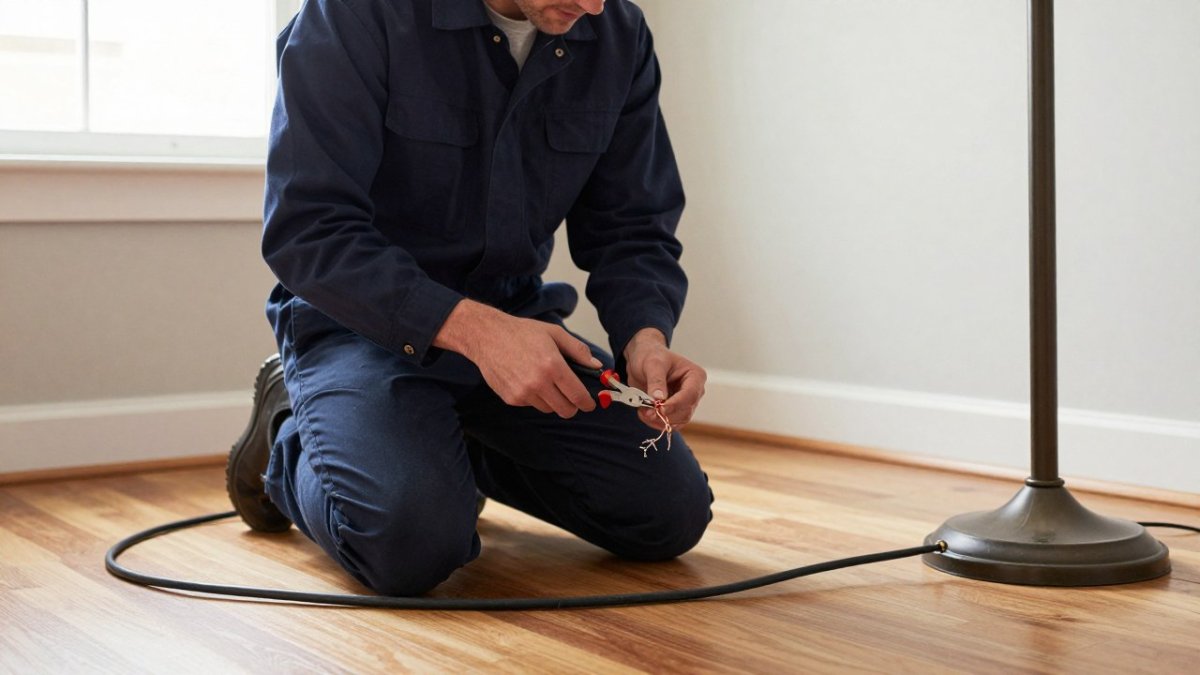
A loose connection is the most common cause of overheating at outlets and switches: when a wire is not tightened properly, current jumps a tiny gap, and that gap creates heat.
Damaged insulation is the other big one. It cracks with age, gets chewed by pests, or gets nicked during a renovation. Once bare wire touches wood or metal, you have a fire hazard and a shock hazard at once.
Watch for these signs:
Frayed wires visible behind an outlet cover
Exposed wires anywhere you can see them
Cracked or brittle insulation on old wiring
Watch Out Never push a loose outlet back into the wall and call it fixed. The loose connection inside is still there, still heating up, and still hidden. That is how fires start behind walls.
Aluminum and Knob-and-Tube Wiring in Older Homes
Older homes carry wiring types that behave differently from modern cable. Aluminum wiring, common in homes built between the mid-1960s and mid-1970s, expands and contracts more than copper, loosening connections over time.
Knob-and-tube wiring is even older, often found in homes built before the 1950s. It has no ground wire and brittle insulation that crumbles when disturbed.
Older wiring is not automatically unsafe, but it raises your risk and deserves a professional inspection.
Warning Sign 1: Burning Smells or Warm Outlets and Switches
A burning smell near an outlet, switch, or the electrical panel is an emergency. Stop using that circuit and call a licensed electrician immediately.
A switch plate that feels hot to the touch is not normal, nor is a faint plastic or fishy smell with no obvious source, that smell is often overheated insulation.

Other things to check for:
Discolored outlets with brown or black marks
Charred outlets or scorched switches around the plate
A panel that feels warm to the touch
Key Takeaway Heat and smell are the two most reliable early warnings of faulty electrical wiring. If you notice either one, treat it as urgent, not as something to watch.
Warning Sign 2: Flickering Lights and Electrical Problems
Flickering lights are the most misunderstood sign on this list. Sometimes they mean nothing; sometimes a loose connection is arcing inside a wall. The trick is telling those apart before you decide whether to change a bulb or call an electrician.
Staley Electric
Start with the scope of the flicker, where it happens tells you almost everything about the cause.
One bulb flickers, others on the same fixture are steady: usually the bulb, the socket, or the fixture's own wiring, not the home's wiring.
Every light on one circuit flickers together: a loose connection somewhere on that circuit run, often at an outlet or junction box the lights share.
Lights dim or pulse when a large appliance starts: a voltage drop, which can point to an undersized circuit, a failing connection, or a service capacity issue.
Why Flickering Happens at All
A light flickers when the current reaching it is not steady. Three mechanisms cause that:
A loose connection. Current has to jump a gap, which creates heat and an intermittent contact. This is the classic wiring fault and the one most likely to start a fire.
A shared or overloaded neutral. In older homes, circuits sometimes share a neutral. When one circuit's load changes, it can modulate the voltage on the other, and you see it as flicker.
A failing device. A dimmer switch that is not rated for the bulb type (for example, a standard dimmer paired with an LED or a CFL) will flicker even when the wiring is fine.
Buzzing Lights and Buzzing Outlets
A buzz is vibration. Electrical parts that vibrate work themselves loose, and loose parts get hot. A faint hum from a dimmer is usually harmless; a loud buzz from an outlet, switch, or fixture is not, treat it like a burning smell and stop using that circuit.
What You Can Safely Check
Before you call anyone, rule out the easy causes:
Swap the flickering bulb with a known-good one from another fixture.
Tighten the bulb in the socket, a loose bulb flickers.
If it is a dimmer, confirm the dimmer is rated for the bulb type.
If the flicker follows the circuit rather than the bulb, stop there. Do not open the fixture or the outlet. A loose connection behind a wall is not something to tighten yourself.
Watch Out Do not ignore a flicker that comes with a buzz, a warm switch plate, or a burning smell. Any two of those together mean the circuit should be switched off at the breaker until an electrician looks at it.
Key Takeaway Flicker that stays with one bulb is usually a bulb problem. Flicker that follows a circuit, a room, or the whole house is a wiring or service problem, and it deserves a professional look.
Warning Sign 3: When Your Circuit Breaker Keeps Tripping
A circuit breaker that keeps tripping is doing its job. It is telling you something on that circuit is drawing too much current or shorting out. The question is what.
Tripped Breaker vs. Overloaded Circuit vs. Faulty Appliance
These three problems look identical from the hallway. Here is how to sort them out:
Symptom | Likely Cause | What It Means |
Trips when many devices run at once | Overloaded circuit | Too much demand for one circuit |
Trips when one appliance starts | Faulty appliance | The appliance itself is the problem |
Trips with nothing running | Wiring fault | Damaged wiring or a loose connection |
Trips immediately after reset | Short circuit | Stop resetting it and call an electrician |
The frequency of breaker trips matters. A breaker that trips once a year during a heat wave is fine; one that trips weekly or daily is a wiring problem waiting to become a fire.
Pro Tip Unplug everything on the tripping circuit, then reset the breaker. If it holds, plug devices back in one at a time. The device that trips it is your culprit. If the breaker trips with nothing plugged in, the problem is in the wiring itself.
Warning Sign 4: Sparks, Shocks, and Unusual Sounds
Sparks, shocks, and crackling sounds are the most serious signs on this list.
Sparking when you plug something in is not normal. A small blue flash inside a switch is normal.
Crackling sounds inside a wall or at an outlet mean arcing. Arcing is how electrical fires start.
Stop using the outlet. Do not touch it again. Call an electrician.
How to Check Electrical Wiring in a House Safely
You can safely check a few things yourself. Everything else belongs to a licensed electrician. Knowing the line between the two protects you and your home.
Safe for you to do:
Look for discoloration, scorch marks, or heat damage at outlets and switches
Test outlets with a plug-in circuit tester
Check that GFCI outlets trip when you press the test button
Not safe for you to do:
Remove outlet covers to inspect wiring
Open the electrical panel
Replace outlets, switches, or breakers
If you are unsure whether a task is safe, it is not. Call a professional. Grace Mechanical Services handles electrical inspections and repairs for homeowners who would rather not guess.
What to Do Next: Emergency Actions and Professional Inspection
Recognizing a warning sign is only half the job. Knowing what to do in the next five minutes, and what to expect from a professional, is what actually prevents a fire. This section covers both, plus the maintenance habits that keep small problems small.
Emergency Thresholds: When to Act Right Now
Some signs give you time to schedule an appointment. Others do not. Use these thresholds.
Leave the home and call 911 if you see or smell any of the following:
Visible smoke from an outlet, switch, or the electrical panel
Active sparking or arcing you can see or hear
A persistent burning odor that does not go away after you switch off the circuit
Switch off the circuit at the breaker, then call an electrician today, if you have:
A burning smell that stops once the circuit is off
A switch plate or outlet that is hot to the touch
A breaker that trips immediately every time you reset it
Schedule an inspection soon if you have:
Occasional flickering on one circuit
A breaker that trips more than once a month
Two-prong outlets in a home you plan to keep
What to Do in the First Five Minutes
If you smell burning or see smoke:
Do not touch the outlet, switch, or appliance.
If you can reach the breaker panel safely, meaning no smoke or heat is coming from it, switch off the main breaker.
Leave the home and call 911 from outside.
Do not re-enter until the fire department says it is safe.
If you get a shock but feel fine:
Stop using that outlet or appliance immediately.
Unplug the device if it is safe to do so.
Switch off the circuit at the breaker.
Call an electrician. Even a mild shock means current reached a path it should not have.
Watch Out Never reset a breaker that trips immediately. A breaker that trips the instant you flip it is telling you there is a short or a ground fault on that circuit. Resetting it repeatedly can start a fire inside the panel.
What a Professional Inspection Actually Involves
A qualified electrician does not just look at your outlets. A thorough inspection typically includes:
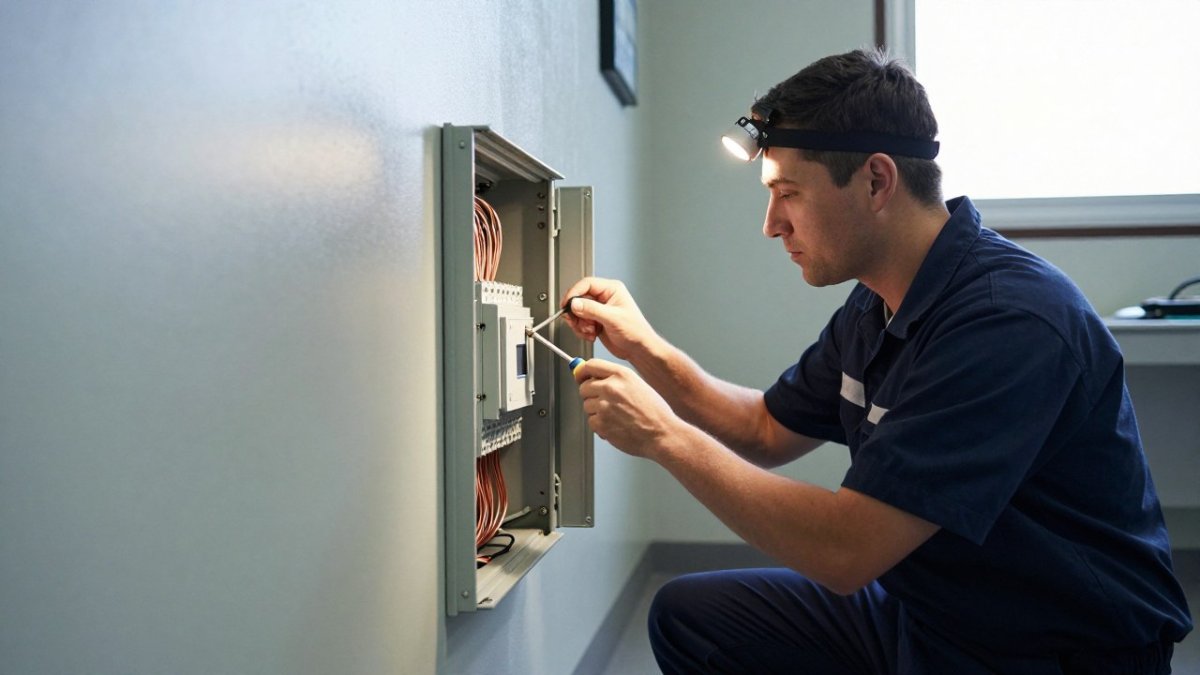
Panel assessment: checking breaker ratings against the wire gauge they protect, looking for double-tapped breakers, scorching, corrosion, and signs of an overloaded panel that cannot carry modern demand.
Grounding and bonding: verifying that the system is properly grounded and that metal parts that could become energized are bonded.
Outlet and switch inspection: pulling a sample of devices to check for back-stabbed connections, loose terminals, damaged insulation, and heat damage.
Ask the electrician to walk you through what they find and to put it in writing, useful when you sell the home and when you plan upgrades.
Prevention and Maintenance
Most wiring failures are slow. These habits keep them slow:
Do not overload outlets. A single receptacle is not designed to run a space heater, a microwave, and a hair dryer at once. Use a power strip with its own breaker for electronics, not for high-draw appliances.
Do not daisy-chain extension cords. A cord that feels warm is a cord that is overloaded.
Replace damaged cords and plugs. A frayed cord is a fire waiting for a reason.
At Grace Mechanical Services, we are a family-owned business with 24/7 emergency service and experience in both HVAC and electrical systems. If you have noticed any of the signs in this guide, one call covers your home's comfort and its safety.
Frequently Asked Questions
What are the most common signs of faulty electrical wiring?
The most common signs of faulty electrical wiring include flickering or dimming lights, burning smells near outlets or switches, warm or hot outlets, discolored or charred outlets, sparking when you plug something in, and a circuit breaker that keeps tripping. Any one of these warrants a professional inspection, because faulty wiring is a leading cause of residential electrical fires.
Can faulty wiring cause a burning smell or warm outlets?
Yes. A burning smell near an outlet, switch, or the electrical panel usually means insulation is overheating or a connection is arcing. Warm outlets and switches point to loose connections or an overloaded circuit drawing more current than the wiring can handle. If you notice either, stop using that outlet and call a licensed electrician promptly, since both are fire hazards.
How do I check the electrical wiring in my house?
Safe checks you can do yourself include looking for discolored outlets, testing GFCI buttons, checking that the breaker panel labels match actual circuits, and noting any flickering lights or warm switch plates. You should not remove outlet covers, open the panel, or touch exposed wires. Anything beyond a visual check requires a licensed electrician, who can test for loose connections, damaged insulation, and proper grounding.
When should I call an electrician about a wiring problem?
Call an electrician immediately if you smell burning near an outlet, see sparks, feel a shock or tingling from a switch, notice charred or scorched outlets, or if your circuit breaker keeps tripping after you reset it. These are emergency-level symptoms. For less urgent signs like occasional flickering, schedule an inspection within a week or two rather than waiting for the problem to worsen.
Electrical problems rarely fix themselves, and the ones that hide behind your walls are the ones that hurt most. If you have noticed any of these warning signs, do not wait for a bigger one. Get started with Grace Mechanical Services and book a service for a full electrical safety inspection, expert repair, and the peace of mind that comes from knowing your home is safe.
Book a Service
Comments