Why Are My Electrical Outlets Warm? Causes and Fixes

Table of Contents
Warm vs. Hot: When an Outlet Is Trying to Tell You Something
How to Tell If an Outlet Is Overloaded
High-Draw Appliances and Circuit Limits
Power Strips, Extension Cords, and Load Capacity
Signs of Faulty Electrical Wiring Behind the Wall
Loose Terminal Connections and Back-Stabbed Wiring
Aluminum vs. Copper Wiring Risks
Your Visual Inspection Checklist Before Calling Anyone
The Warm vs. Hot Threshold
What to Look For, Step by Step
Reading the Results
A Note on Aluminum Wiring
Electrical Panel Upgrade Cost and When It Makes Sense
How Smart Home Devices Change the Load on Your Outlets
The Always-On Draw
Heat Trapping at the Faceplate
What to Do About It
The Bottom Line
Why Are My Electrical Outlets Warm? What to Do Next
Frequently Asked Questions
Last Updated: October 7, 2026
Warm vs. Hot: When an Outlet Is Trying to Tell You Something
If you're asking why are my electrical outlets warm, the answer usually comes down to heat from normal current flow or heat from a problem behind the wall.
Here's the core distinction most guides skip: **warm means heat you can hold your hand on for a few seconds.
This guide breaks down the causes, the checks you can safely do yourself, and when to stop and call an electrician.
Watch Out If an outlet is hot to the touch, discolored, or smells like burning plastic, stop using it and cut power at the breaker. Do not plug anything else in. That combination points to a real electrical fire hazard.
How to Tell If an Outlet Is Overloaded
An overloaded circuit is the most common reason an outlet feels warm. It happens when the total amperage drawn by everything on that circuit exceeds what the circuit breaker and wiring can safely carry.
Every circuit has a load capacity. A standard household circuit is often rated for 15 or 20 amps.
Signs of an overloaded circuit include:
The outlet or faceplate feels warm to the touch
The circuit breaker trips repeatedly
Lights on the same circuit dim when an appliance kicks on
A buzzing sound comes from the outlet or panel
The outlet only feels warm when certain devices run
If the warmth disappears when you unplug a device, the load is your likely culprit.
High-Draw Appliances and Circuit Limits
Some appliances pull far more current than others. Space heaters, microwaves, hair dryers, and air fryers are common offenders. Plug two of them into the same circuit and you can push it past its limit fast.
A common mistake is assuming a power strip spreads the load safely. It doesn't. A power strip adds outlets, not capacity.
Power Strips, Extension Cords, and Load Capacity
Power strips and extension cords are temporary tools, not permanent wiring. Daisy-chaining them multiplies the risk.
Watch for these red flags:
A warm extension cord under a rug or behind furniture
Multiple high-draw devices on one strip
Cords that feel hot near the plug
If you need more outlets in a room, the real fix is added circuits, not more strips.
Signs of Faulty Electrical Wiring Behind the Wall
Warmth that shows up even under a light load points to faulty electrical wiring, not overload. The problem is often at the connection point where the outlet meets the wire.
Loose Terminal Connections and Back-Stabbed Wiring
A loose terminal connection creates resistance. Resistance creates heat. That heat builds up inside the box, where you can't see it.
Many outlets are wired using "back-stabbed" connections, where the wire pushes into a slot on the back of the receptacle instead of wrapping around a screw. These connections loosen over time. As they loosen, resistance and heat climb.
Warning signs of a loose connection:
Warmth at the outlet with little plugged in
A faint buzzing or crackling sound
A burning smell near the plate
Scorch marks or discoloration on the faceplate
Aluminum vs. Copper Wiring Risks
Older homes sometimes have aluminum wiring instead of copper. Aluminum expands and contracts more with temperature changes, which loosens connections over time.
Aluminum wiring needs special connectors and extra care. If your home was built or rewired in the 1960s or 1970s, it's worth having an electrician confirm what's behind your walls.
Your Visual Inspection Checklist Before Calling Anyone
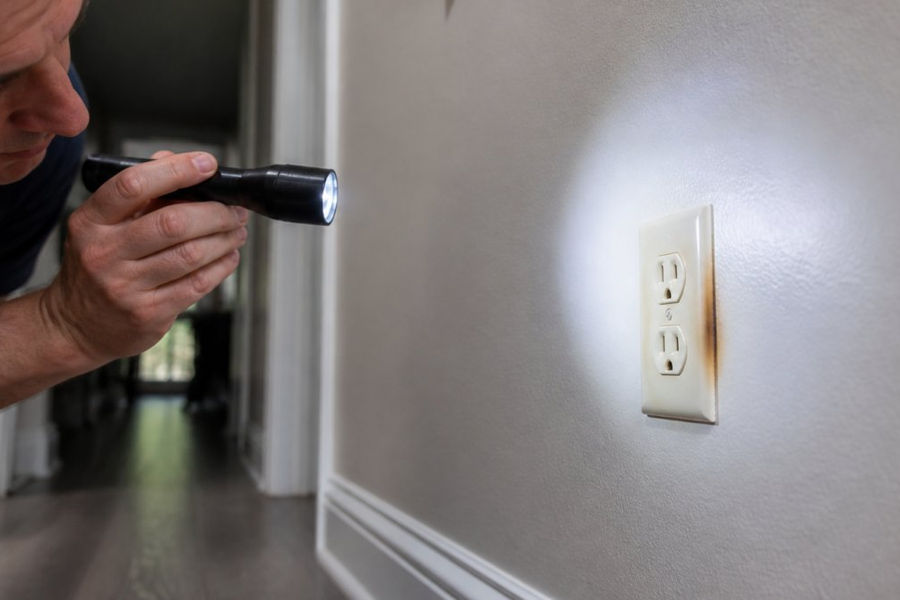
A careful look can tell you a lot before you spend a dime. Do this inspection with the power off at the breaker, and never touch exposed wiring.
The Warm vs. Hot Threshold
Most guides wave at this distinction without giving you anything to measure against. Here's a practical sensory guide:
Slightly warm: You can rest your hand on the faceplate for several seconds without discomfort. This can be normal on a loaded circuit.
Noticeably warm: Your hand wants to move after a second or two. Treat this as a signal to investigate the load.
Hot: You pull your hand away immediately. Stop using the outlet and cut power at the breaker.
Scorched or smoking: This is an active fire risk. Cut power and call a licensed electrician now.
You don't need a thermometer to make this call. Your hand is a reliable first-pass sensor. If you want a number, most practitioners treat a faceplate that's uncomfortable to touch after a few seconds as a sign the connection or load needs attention.
What to Look For, Step by Step
Work through this list with the breaker off. Note what you find so you can describe it accurately to an electrician.
Discoloration or scorch marks on the faceplate or around the slots, heat has already been high enough to char material.
Melting or warping of the plastic receptacle, sustained heat, not a one-time spike.
A burning or plastic smell near the plate, off-gassing from overheated insulation.
Buzzing, crackling, or popping, arcing at a loose connection.
A loose outlet that wiggles in the wall, the box or mounting may be compromised, and the wiring behind it may be strained.
Reading the Results
One red flag is worth a professional look. Two or more means call today. The combination of warmth plus a burning smell, or warmth plus discoloration, is the pattern that most often precedes a fire, don't wait to see if it resolves.
Watch Out Never remove a faceplate or pull a receptacle out of the wall to inspect wiring unless you've confirmed the breaker is off and you're comfortable working around electrical components. If you're not, stop and call a licensed electrician.
A Note on Aluminum Wiring
If your home was built or rewired in the 1960s or 1970s, there's a chance it has aluminum branch wiring rather than copper. Aluminum expands and contracts more with temperature swings, which loosens connections over time and raises resistance. Aluminum wiring needs special connectors and extra care, it's not a DIY retrofit. If you see dull silver-colored wire at a receptacle, have an electrician confirm the wiring type before you do anything else.
Electrical Panel Upgrade Cost and When It Makes Sense
Electrical panel upgrade cost varies widely based on your home's size, wiring, and local requirements. The honest answer is that it depends on the scope of work.
An upgrade may make sense when:
Your panel is old and can't handle modern loads
You keep tripping breakers even after rebalancing circuits
You're adding high-draw appliances or an EV charger
Your panel uses outdated fuses instead of breakers
For current pricing, the U.S. Department of Energy's home electrical safety guidance is a good starting point on why modern panels matter. For an exact figure, request a quote from a licensed electrical contractor who can inspect your setup.
Pro Tip Before any panel work, ask for the contractor's license number and proof of insurance. A properly covered electrician protects you if something goes wrong on the job.
How Smart Home Devices Change the Load on Your Outlets
Smart plugs, hubs, and always-on devices add a small but constant draw. Individually, they're minor. Stacked across a room, they add up, and unlike a hair dryer that runs for ten minutes, these devices are drawing current around the clock.
The Always-On Draw
A single smart plug might draw a fraction of an amp at idle. That's not the problem. The problem is what it's powering and for how long.
Common always-on contributors on one circuit:
Smart speakers and displays
Streaming sticks and smart TVs in standby
Security cameras and doorbell transformers
Smart hubs and mesh Wi-Fi nodes
Charging bricks for phones, tablets, and tools
None of these is a problem alone. Together, on a 15-amp circuit that's already carrying a lamp, a TV, and a phone charger, they can push a receptacle closer to its limit than the homeowner realizes.
Heat Trapping at the Faceplate
Here's the mechanism most guides skip: smart plugs and bulky adapters sit flush against the outlet face and can trap heat that would otherwise dissipate into the room.
If a smart plug feels warm, unplug it and check the outlet directly. If the outlet is warm with the smart plug removed, the problem is behind the wall, not in the plug.
What to Do About It
Count the load, not the plugs. A power strip or smart strip adds outlets, not capacity.
Keep high-draw devices on dedicated circuits where possible, space heaters, air fryers, and microwaves shouldn't share a circuit with always-on electronics.
Check smart plugs periodically. Unplug them and feel the outlet face. Warmth that persists with nothing plugged in is a wiring signal.
Don't daisy-chain smart plugs into power strips into extension cords. Each connection point adds resistance.
Pro Tip If you're adding smart devices to an older home, have an electrician confirm the circuit's actual load capacity first. A 15-amp circuit that was fine for a lamp and a clock radio may not be fine for a full smart-home setup plus a space heater.
The Bottom Line
Smart devices don't create a new kind of electrical hazard, they concentrate existing load into a smaller footprint and run it longer. The fix is the same as any overload: reduce the draw, spread it across circuits, and treat persistent warmth as a signal to investigate.
Why Are My Electrical Outlets Warm? What to Do Next
The short answer: warm outlets come from either normal load or a hidden fault. You can't always tell which from the outside.
Your safest path:
Unplug devices and see if the warmth fades
Check for discoloration, smell, or sound
Reduce the load on that circuit
Call a licensed electrician for anything hot, scorched, or buzzing
Electrical problems rarely improve on their own. They usually get worse, and sometimes they get dangerous.
Frequently Asked Questions
Should I be worried if an outlet is hot?
Yes. An outlet that is hot to the touch is a serious warning sign and you should stop using it immediately. Warm outlets can sometimes be normal under heavy load, but a genuinely hot outlet often points to a loose terminal connection, an overloaded circuit, or failing wiring. Turn off the breaker feeding that outlet and have a licensed electrician inspect it before you plug anything back in. Ignoring a hot outlet raises your risk of an electrical fire hazard.
Is it normal for an outlet to feel warm?
A slight warmth is sometimes normal when a high-draw appliance like a space heater or microwave is running, because current flowing through the receptacle generates some heat. The outlet should cool down once the appliance stops. If an outlet stays warm with nothing plugged in, feels noticeably hot, or shows discoloration or a scorched plastic smell, that is not normal and points to a loose terminal connection or an overloaded circuit that needs professional attention.
Can a bad outlet start a fire?
Yes. A failing outlet is one of the more common points where an electrical fire hazard begins. Loose terminal connections, back-stabbed wiring, and overloaded circuits all generate heat at the receptacle. Over time that heat causes insulation melting, arcing, and thermal damage to the surrounding materials. If you notice buzzing sounds, discoloration, or a burning smell near an outlet, cut power at the circuit breaker and call a licensed electrician rather than continuing to use it.
How do I know if my outlet is wired incorrectly?
A few signs point to incorrect wiring. The outlet may feel warm even with a light load, a plug may fit loosely, or a receptacle tester will show an open ground, reversed polarity, or an open neutral. Tripped breakers that reset only to trip again are another clue. Older homes sometimes have aluminum wiring, which expands and contracts differently than copper and loosens at terminals over time. Any of these findings warrants a safety inspection by a licensed electrical contractor.
If your outlets are running warm and you're not sure why, don't wait for a small issue to become a fire hazard. Grace Mechanical Services is a family-owned team serving North Central Indiana with 24/7 emergency electrical service and full residential repairs. We handle everything from loose connections to panel upgrades, and we'll tell you honestly what your home needs. Book a Service with Grace Mechanical Services and get real answers from a team that shows up when it counts.
Book a Service


Comments